
Adders and lizards
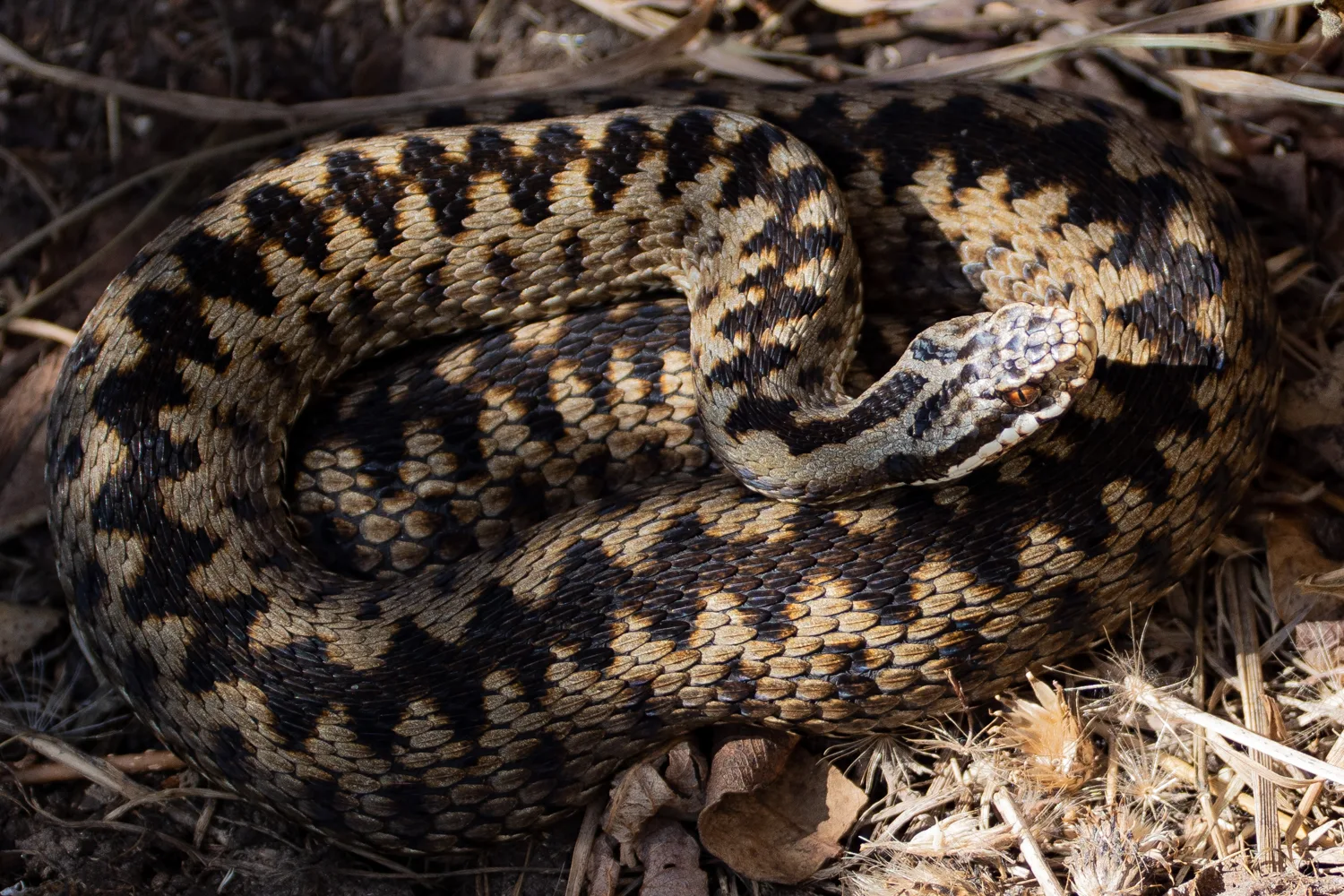
The original visit produced several adder sightings, including animals so well camouflaged that they were easy to overlook among the dry vegetation. The photographs show the zigzag markings clearly. Reptile sightings depend on the weather and season.
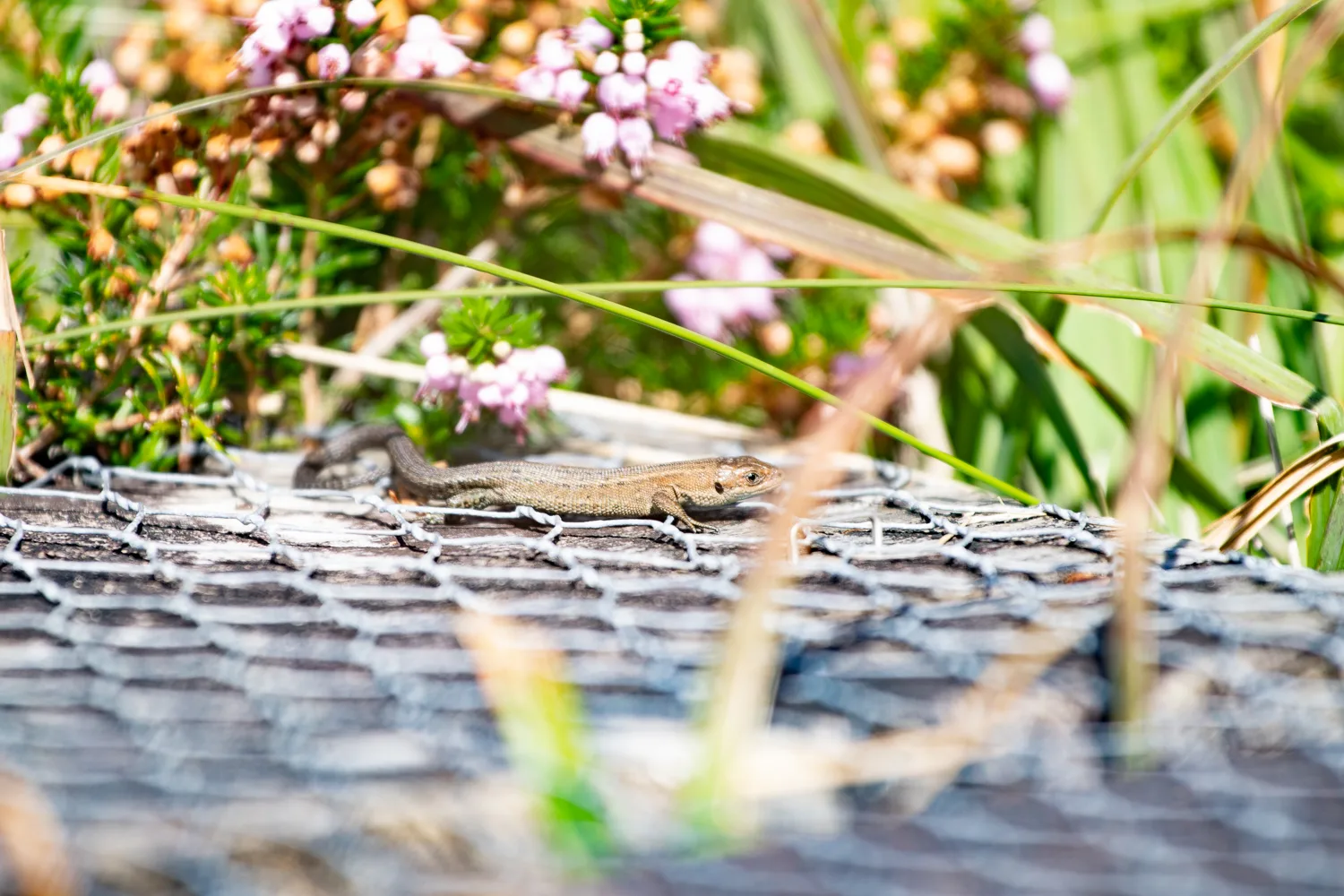
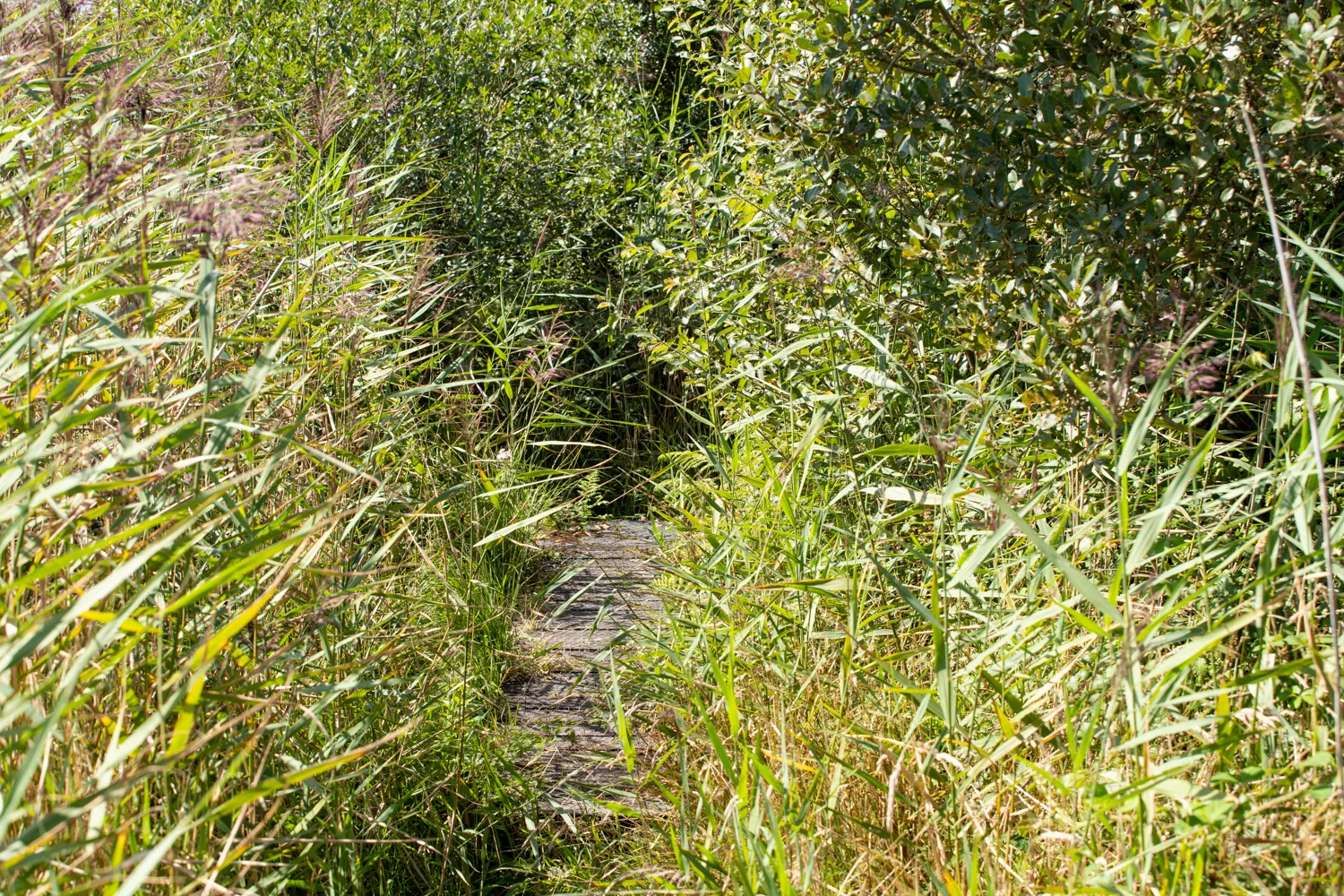
Common lizards were also photographed basking on the boardwalk. Watch where you place your feet and give basking reptiles space to move away. Never handle an adder or approach closely for a picture. The boardwalks can offer good views of nearby vegetation without leaving the route.
Pools and summer insects
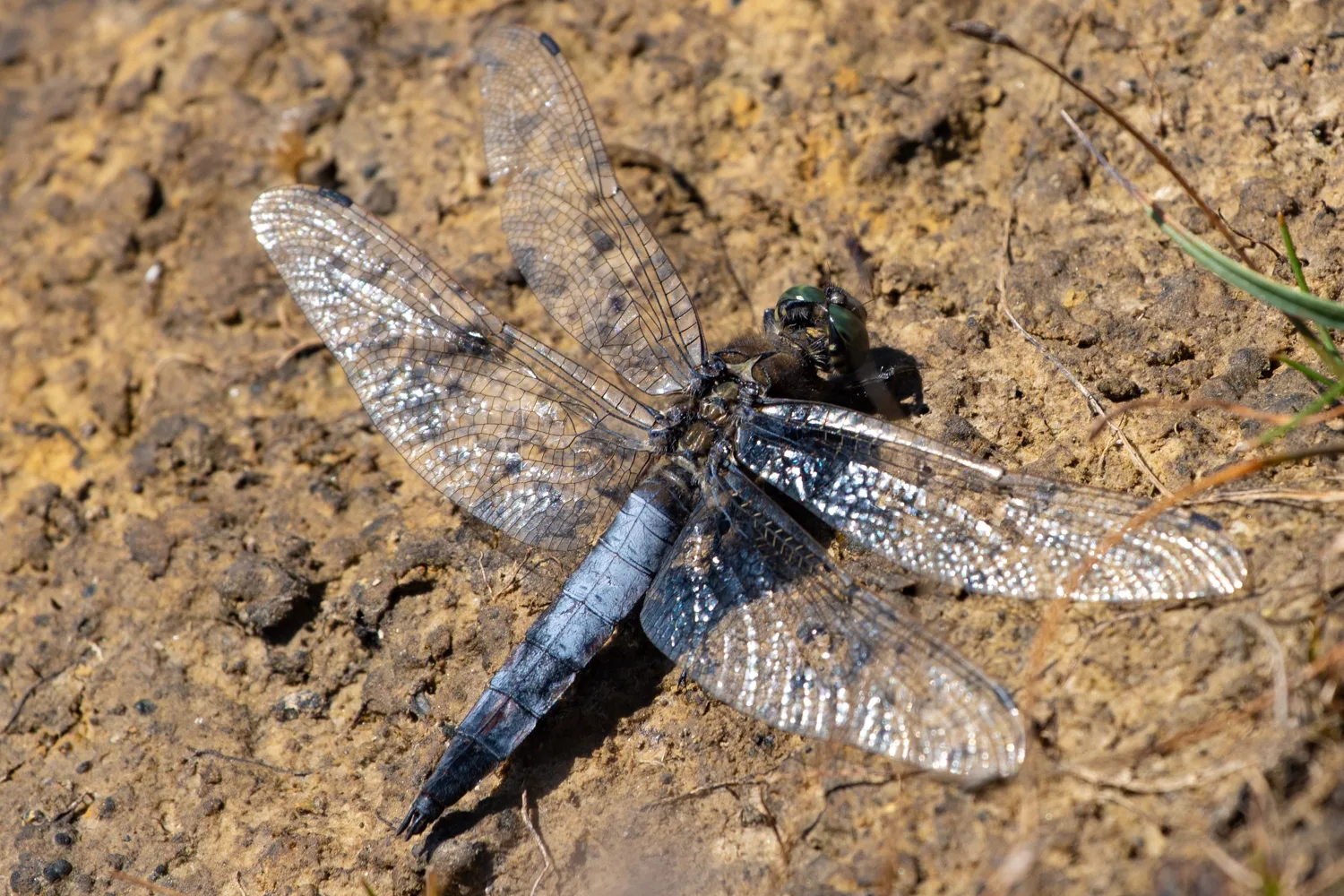
Dragonflies and damselflies were a particular feature of the visit, with butterflies in the surrounding grass and flowers. The black-tailed skimmer shown here was photographed resting on bare ground. Elsewhere, stems around the pools offered perches for damselflies.
Cornwall Wildlife Trust explains that pools and shallow scrapes created on this former farm have helped wetland plants and invertebrates. Some dry out in summer; that seasonal change is part of the habitat, not necessarily a sign that something has gone wrong.
The windmill, boardwalks and wartime remains
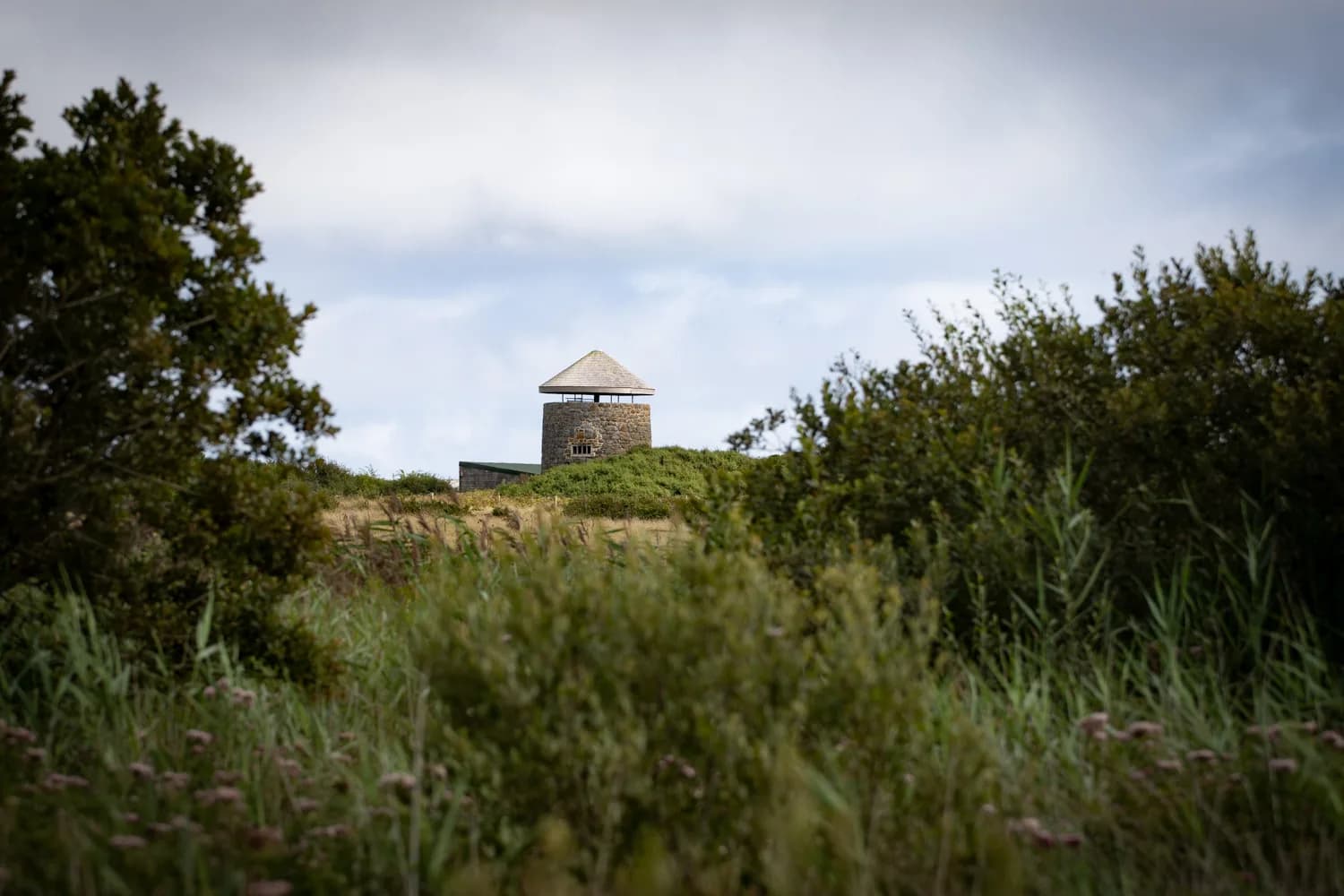
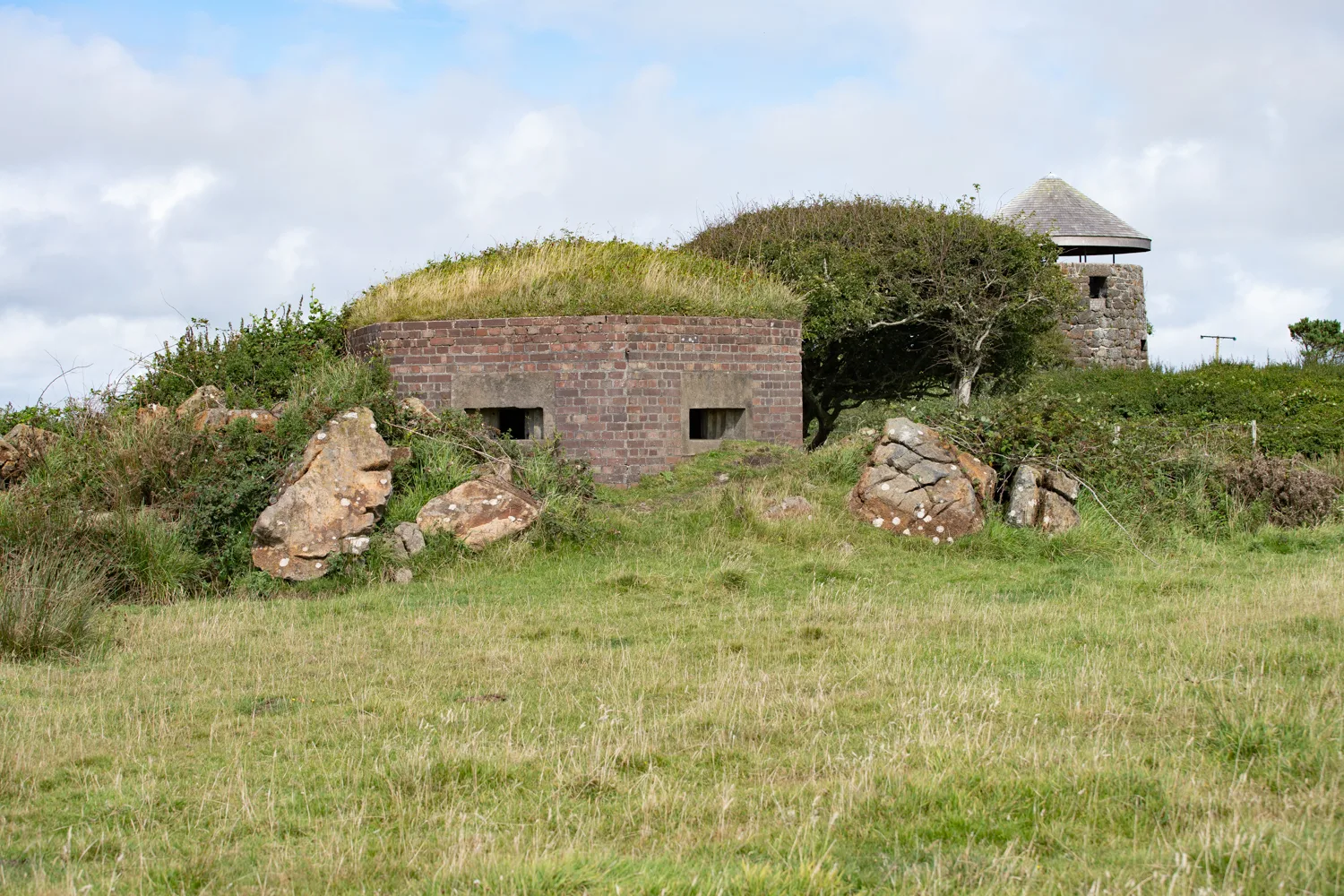
The windmill is a useful landmark as you move around the reserve. The site also contains pillboxes associated with the former RAF Predannack. The Nature Trail and WWII Trail give different ways to explore the wildlife and history.
Follow the waymarks and check the current route information. Wet heath can be difficult underfoot, and a dry-looking surface may conceal softer ground.
Plan your visit
Dogs are not permitted. The reserve manager describes challenging terrain, limited disabled access and ground that becomes waterlogged. It is not suitable for pushchairs. Check Cornwall Wildlife Trust’s page for access works, grazing notices and current visiting information.
Cornwall Wildlife Trust reserve guideSources checked 7 October 2026. Contact details, services and legal developments can change; follow the linked organisations for current information.