
Ponds and wetland wildlife
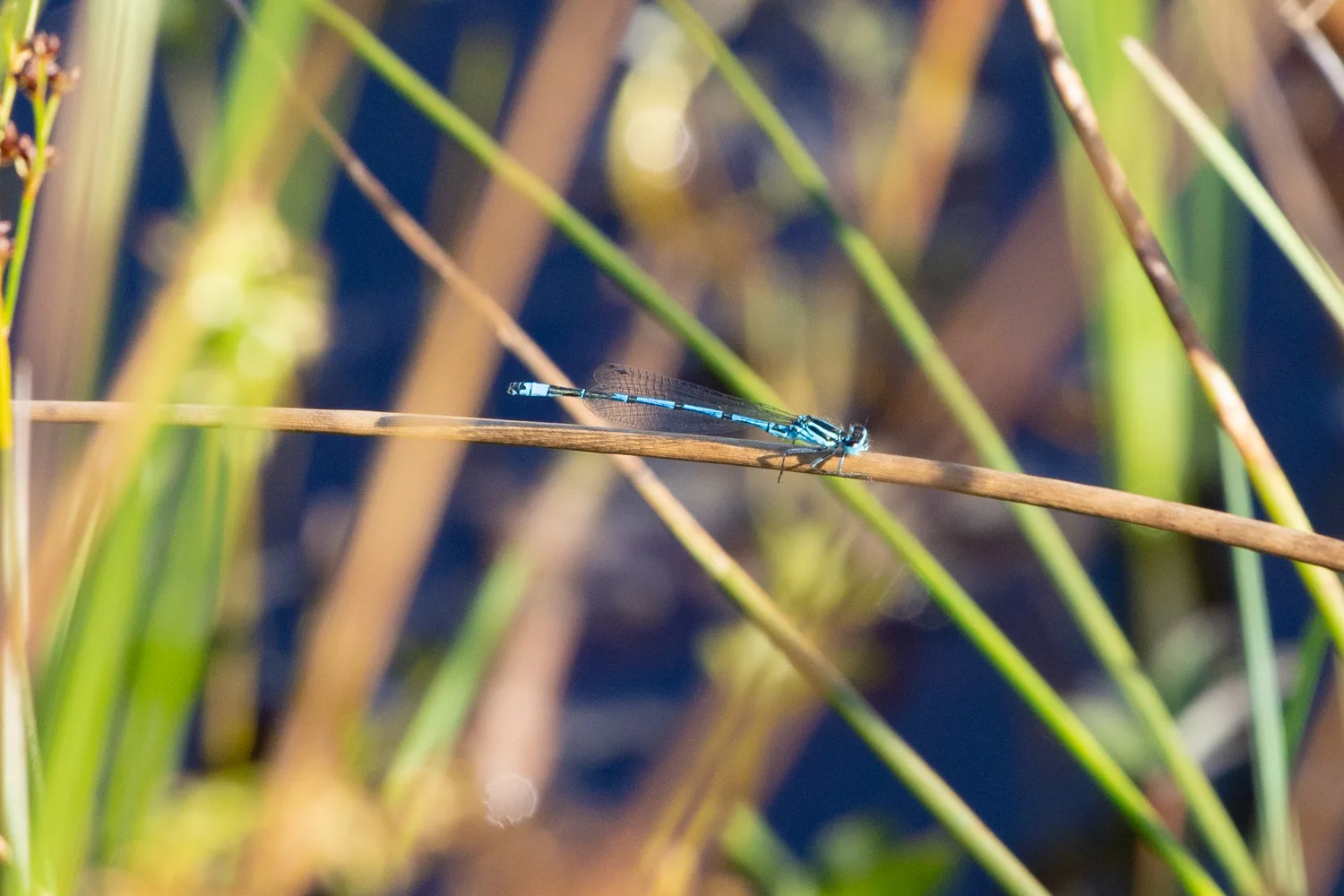
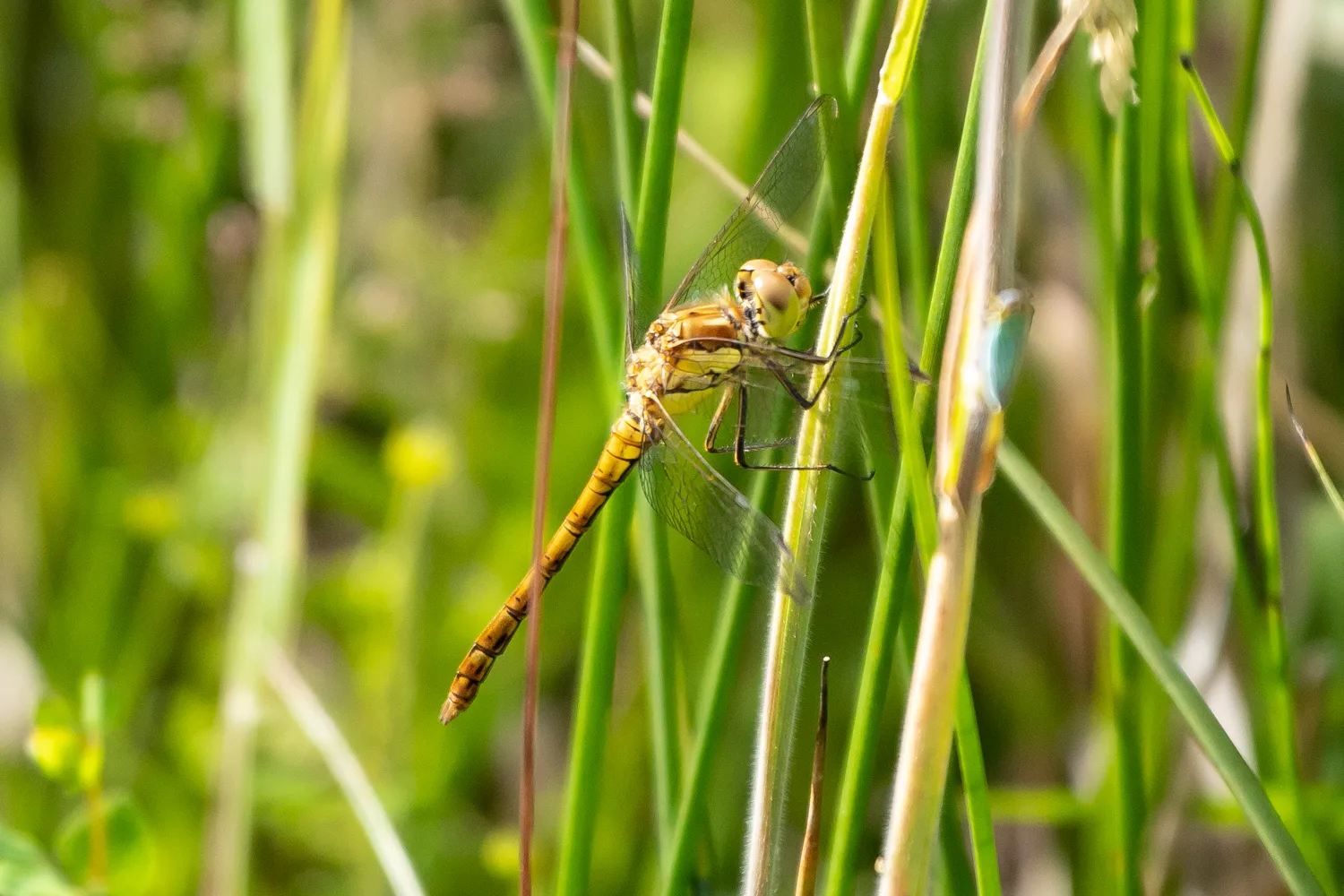
The pools are a good place to begin. Water lilies spread across the surface, while stems at the margins provide resting places for dragonflies and damselflies. In warm weather, watch a small section of bank for a few minutes: insects often return to the same perches, making them easier to observe without following them into the vegetation.
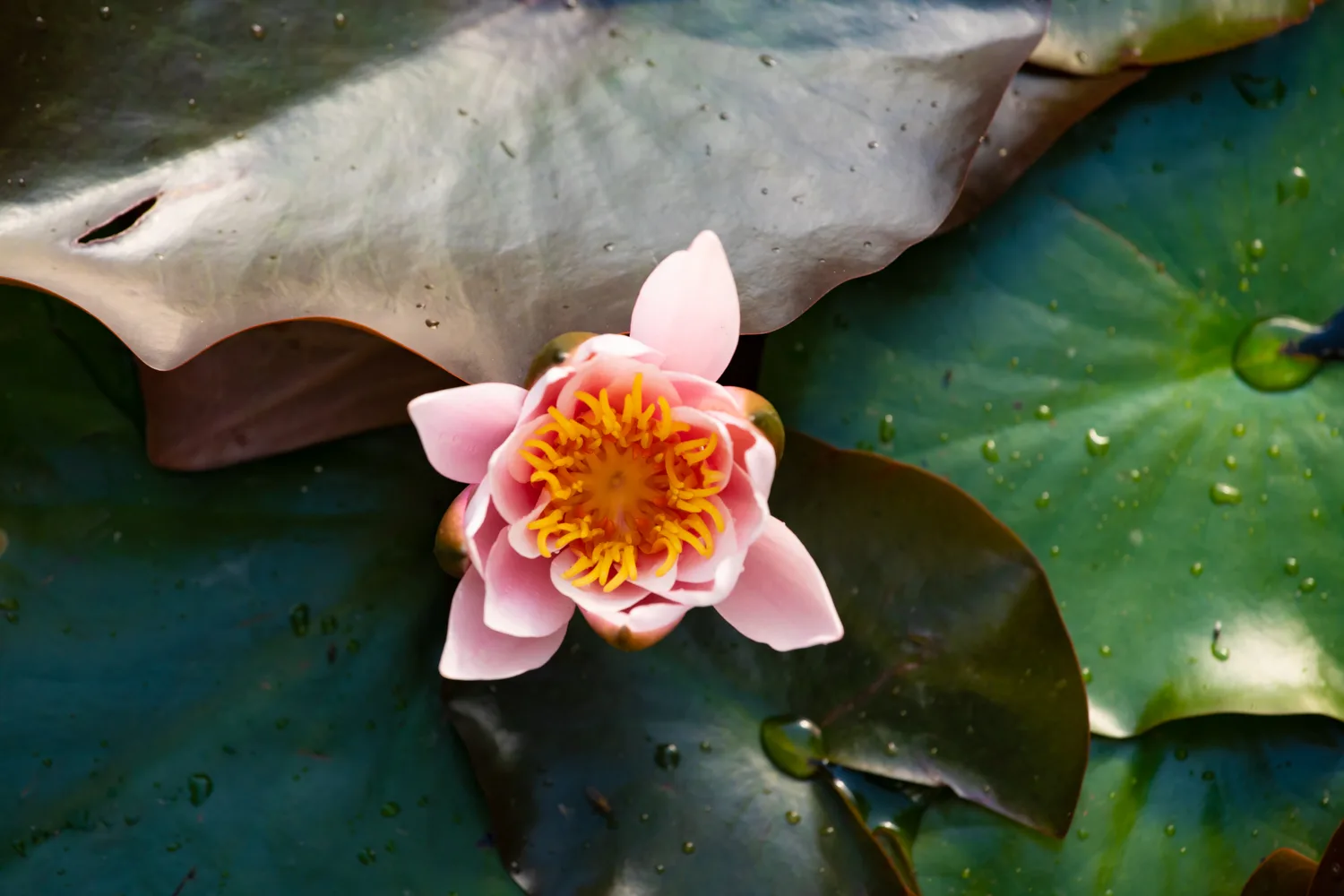
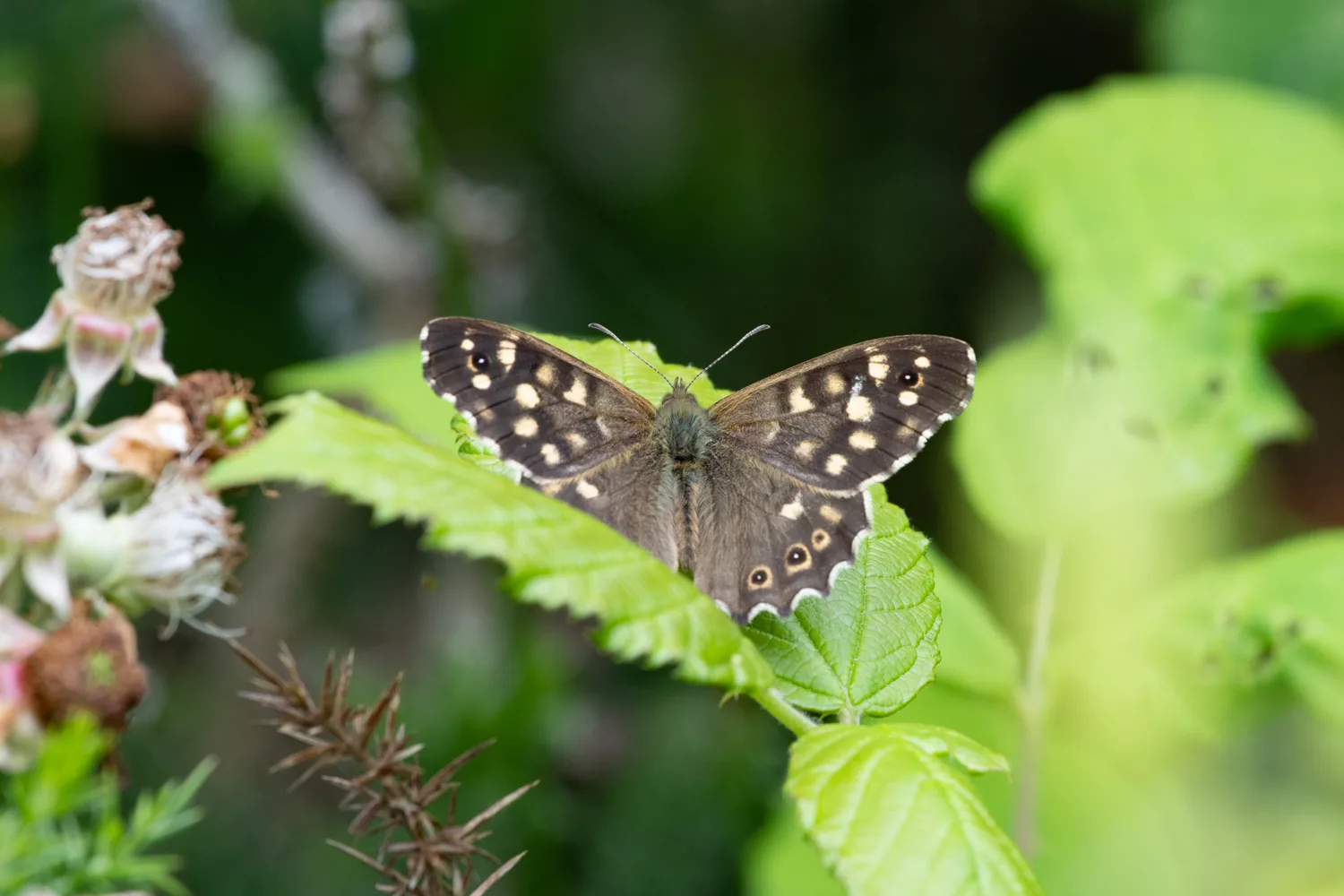
The photographs here were taken during walks around the reserve. They show a common blue damselfly, a common darter and a speckled wood butterfly, as well as the water lilies. The contrast between open water, sunny edges and shaded scrub means that different parts of a short walk can produce quite different sightings.
Beyond the water
Goss is more than a collection of ponds. Heath, grassland and wooded patches sit alongside the wetland, providing shelter and feeding areas. Look along sunny path edges for butterflies and flowering plants. Other photographs from the same visit show foxgloves, ringlets and small skippers; the species you see will depend on the season and weather.
Natural England identifies Goss as an important place for willow tits, marsh fritillary butterflies and wetland plants. Otters also use the reserve, but a visit should not depend on seeing one. Bring binoculars for distant birds and a camera or hand lens for the insects and plants beside the paths.
How the reserve is managed
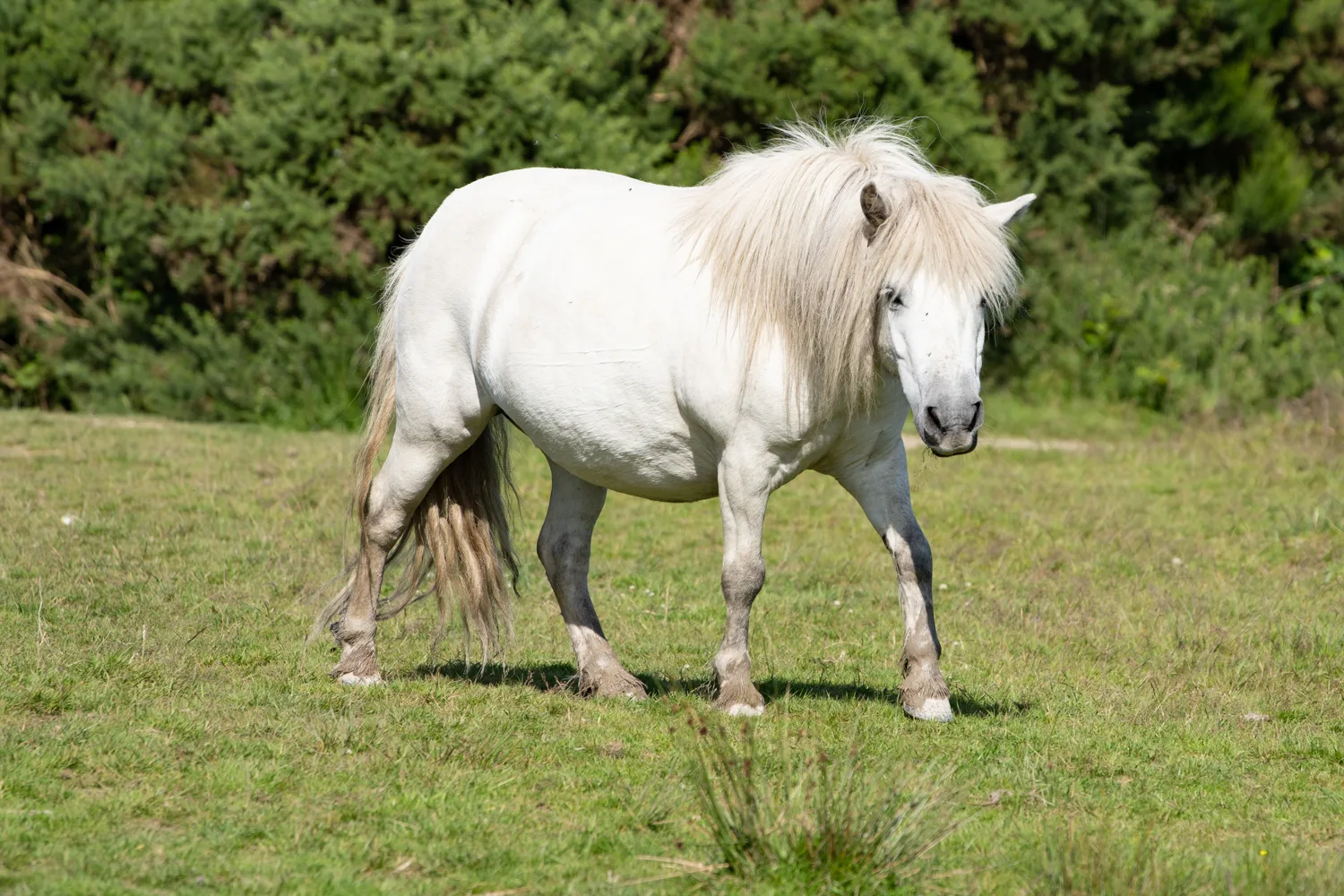
Ponies and cattle graze parts of the moor to help manage the vegetation. Give them plenty of space and follow signs about dogs. You may also notice survey equipment or nest boxes. These are part of conservation work, so leave them undisturbed.
The familiar Goss Moor name still describes this part of the landscape, but the National Nature Reserve was expanded and renamed Mid Cornwall Moors in 2026. That wider reserve connects a number of important Cornish habitats.
Plan your visit
Natural England describes a seven-mile, mostly flat hardstanding multi-use trail, with some stony and muddy sections and gates suitable for cycles, horses and Trampers. Other routes can be considerably wetter. Check its visitor information for car parks, facilities and the route that suits your access needs.
Natural England visitor informationSources checked 7 October 2026. Contact details, services and legal developments can change; follow the linked organisations for current information.